Proprioceptive Neuromuscular Facillitation

Physical Therapy
Proprioceptive Neuromuscular Facilitation
How Does Proprioceptive Neuromuscluar Facilitation Work?
Your muscles are made up of fibers that stretch and contract in order to do something mechanical, like lift and lower your leg. Like many components of the body, your muscles have a built in safe-guard called a myotatic stretch reflex that will signal your muscle to contract if it senses that it is being overstretched. There is another safe guard in your tendons called a golgi tendon organ which signals the muscles to relax when your tendons are stretched to far. Proprioceptive Neuromuscular Facilitation (PNF) utilizes both of these sensory responses in it’s approach to improving flexibility, range of motion and even strength.
How is Proprioceptive Neuromuscular Facilitation Performed?
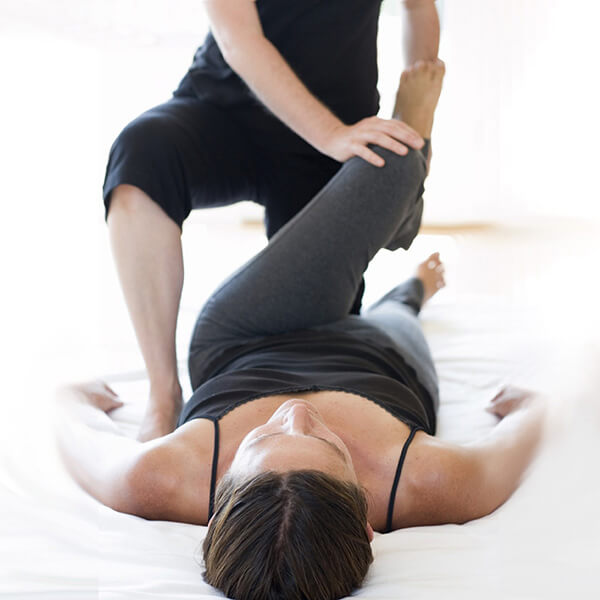
This advanced therapy technique utilizes a series of exercises that combine alternating isometric (static contraction against resistance provided by your therapist) and isotonic (passive) stretching techniques in a way that allows you to achieve maximum static passive flexibility and improvement in range of motion.
There are several different exercises (depending on your condition) that are used during PNF and each therapist has their own style. Common exercises that are used during PNF may include Contract-Relax with Agonist Contract, Hold Relax, Rhythmic Initiation and (used mostly with Parkinsonian symptoms), Rhythmic Stabilization, (Hold Relax Swing and Bounce (used mostly with elite athletes with exceptional muscle control).
Your therapist will demonstrate proper movements providing visual examples as well as providing movement feedback. This is one of the best ways to improve flexibility, range of motion, and everyday movements to increase efficiency and prevent muscle spasms and injury.
Also Related…
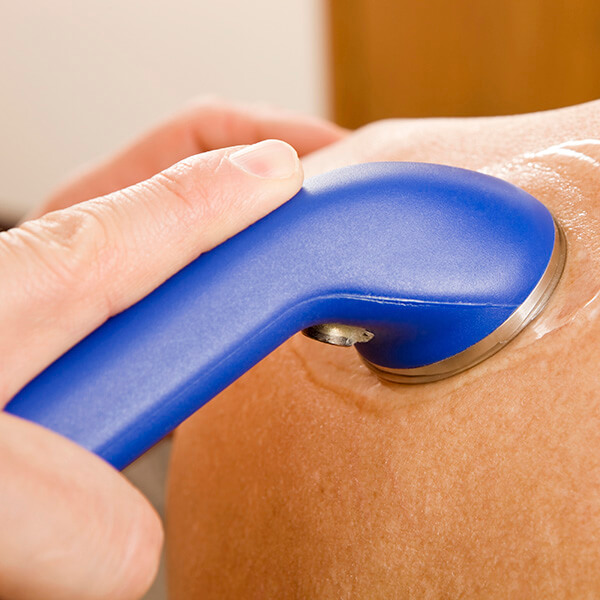
Ultrasound Therapy
Learn more about high level ultrasound, which can be used to heal tissue injuries and treat inflammatory conditions.
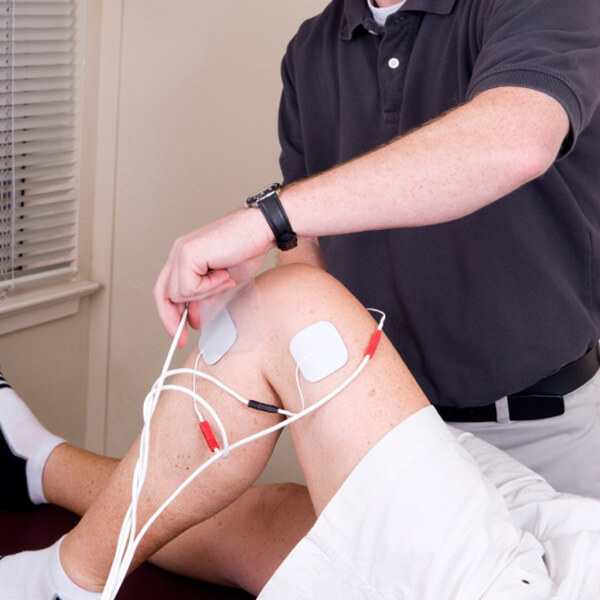
Electrotherapy
low-frequency electrical currents can be used to reduce pain and treat sprains, strains, and spasms.